Performance reviews are designed to be a pillar of professional development, but too often the process brings anxiety, uncertainty and distrust. Many leaders struggle to deliver difficult or constrictive criticism clearly and directly. Part of the challenge arises when the review process happens only once a year. When a formal review presents new or surprising information at a single point in time, it may signal a lack of ongoing communication throughout the year, weakening the leader-employee relationship.
To transform performance management from a formal assessment into a powerful driver that aligns human capital with organizational goals and strategy, leaders must commit to essential changes centered on openness and feedback on a regular basis.
Here are three recommendations to make a significant impact on the process:
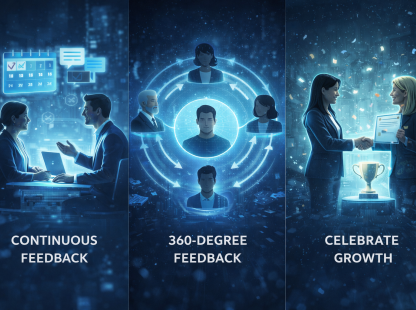
- Establish Continuous and Consistent Feedback on A Regular Basis: Leaders need to commit to ongoing conversations. Managers should not wait for the annual review to discuss performance opportunities and room for improvements. The feedback may be viewed as shocking and unfair. The employee may ask, “why did you wait until now to tell me this.” Hence, we suggest a simple change: Move away from exclusive quarterly or annual check-ins and establish an ongoing feedback loop. Provide targeted, constructive feedback on a weekly basis. This comes on the heels of many organizations experiencing a multigenerational workforce. Frequent communication is particularly crucial for younger generations (Millennials and Gen Z), who often expect and welcome consistent check-ins. According to TRG International, “60% of Gen Z employees favour frequent feedback, compared to Millennials, the percentage drops to only 40%” (TRG International, 2025). A weekly cadence ensures timely and actionable feedback, removing the possibility of surprises from the formal review discussion.
- Implement Comprehensive 360-Degree Feedback: A supervisor's perspective, while significant, only captures a segment of an employee's performance and organizational impact. To achieve true transparency, performance discussions should include a wide range of integrated input. Thus, we suggest a simple change: Continuously introduce and utilize 360-degree feedback. This input should not be limited to other organizational leaders but must include colleagues, peers, and cross-functional team members with whom the employee interacts daily, weekly or quarterly. This will provide a multifaceted view of the employee’s knowledge, skills and competencies, ensuring the review is balanced and objective. The final review then becomes an aggregate of the organization’s collective perspective, versus a single manager’s opinion.
- Reframe the Review as a Celebration of Growth and Opportunity to Empower Employees: The performance review should be viewed as a culmination of a year's worth of work. A dedicated moment to celebrate accomplishments, highlight progress, and recognize growth, while also paving the way for future improvements and opportunities. We suggest a simple change: Structure the review as celebratory and an area for opportunity. Dedicate time to formally recognize major achievements and contributions. To foster engagement and respect for the employee's perspective, the process should institutionalize an avenue for healthy debate.
Employees should be allowed and encouraged to challenge ratings or evaluations they may question. This intellectual, healthy debate between the supervisor and their direct report(s) demonstrates mutual respect, ensures both parties are anchored in concrete evidence, and reinforces the idea that performance is a discussion. When managed correctly, this challenging process builds a stronger, resilient team. By implementing these structural and cultural changes, leaders can ensure that the performance review process becomes a transparent, strategic tool for individual and organizational growth.
Bottom line: An effective leader meets with their direct reports regularly, provides honest feedback, and creates space for employees to voice their perspectives on their progress.